Milk Frothers For Homemade Lattes
Best Sellers
FAQs
Heat your milk separately if needed, then froth it until the texture looks smooth and creamy. Pour freshly brewed espresso into a cup, add the frothed milk, and spoon the foam over the top. For the best texture, keep the frother moving gently through the milk rather than leaving it in one spot.
Dairy milk, oat milk, almond milk, and soy milk can all work well, though each creates a slightly different texture. Whole milk generally produces a rich, creamy foam, while barista-style plant-based milk is formulated to froth smoothly. Try different options to find the flavor and texture you enjoy most.
A handheld frother uses a small whisk to aerate milk in a separate pitcher or cup, giving you more control over the foam. An automatic frother heats and froths milk in one container, making it a convenient option for a streamlined latte routine. Choose based on whether you prefer hands-on control or a simpler process.
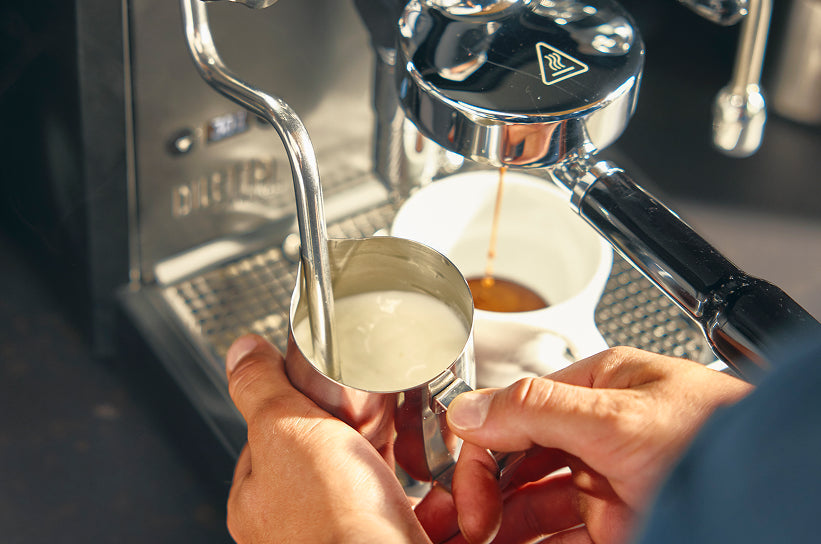
Start with cold milk and use a narrow pitcher or container that gives the milk room to expand. Position the frother just below the surface to introduce air, then lower it slightly to blend the foam into the milk. Tap the container gently on the counter and swirl the milk before pouring to help remove larger bubbles.
Rinse the whisk, frothing attachment, or milk container soon after use so milk residue does not dry onto the parts. Wipe the exterior with a damp cloth and follow the product care instructions for removable components. Avoid immersing electrical parts unless the manufacturer specifically says they are washable.