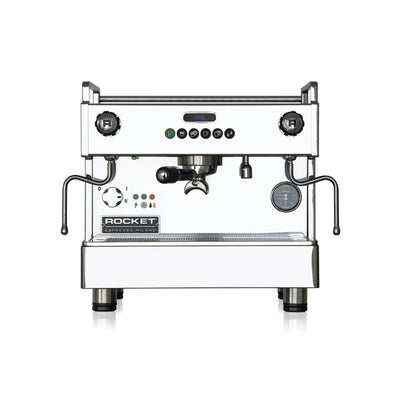
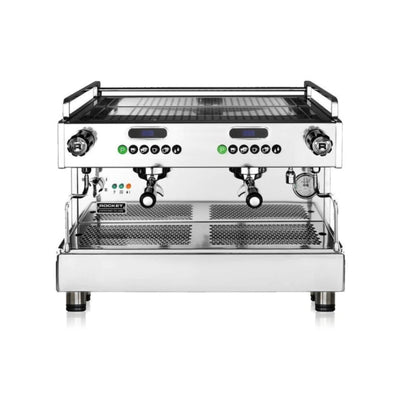
Commercial Automatic Espresso Machines
Compare commercial automatic espresso machines for your café, restaurant, or workplace with your daily drink volume and service pace in mind. Look at brewing controls, ease of cleaning, and staff training needs alongside machine dimensions and installation requirements to choose equipment that fits your space and keeps your coffee service running smoothly.
Best Sellers
FAQs
Commercial automatic espresso machines typically stop extraction at a programmed point, while the barista handles grinding, dosing, and tamping. Superautomatic espresso machines handle grinding, dosing, and brewing internally. Some also automate milk preparation. The main difference is how much hands-on preparation your team manages for each drink.
Traditional commercial automatic espresso machines generally require a separate espresso grinder. Look for a commercial grinder with fine grind adjustment and a workflow that suits your team's drink service. Superautomatic machines typically include a built-in grinder, so a separate grinder is not usually necessary.
Depending on the machine, you may be able to program shot delivery, brew temperature, and pre-infusion. Superautomatic models may also offer settings for coffee strength, grind adjustment, and milk preparation. Use the manufacturer's instructions to learn which settings operators can change and which require a technician.
On traditional automatic machines, a barista usually steams milk with a steam wand and combines it with espresso. Some machines offer assisted steaming. Superautomatic models may draw milk through an integrated system and dispense it into the cup. Check the milk-handling features when choosing between hands-on and automated drink preparation.
Daily care commonly includes cleaning group heads and portafilters, emptying drip trays and grounds containers, and wiping exterior surfaces. Steam wands need wiping and purging after each use. Machines with automatic milk systems require dedicated milk-path cleaning. Follow the manufacturer's schedule for backflushing, cleaning cycles, and approved cleaning products.