Espresso Machines With PID Temperature Control
Best Sellers
FAQs
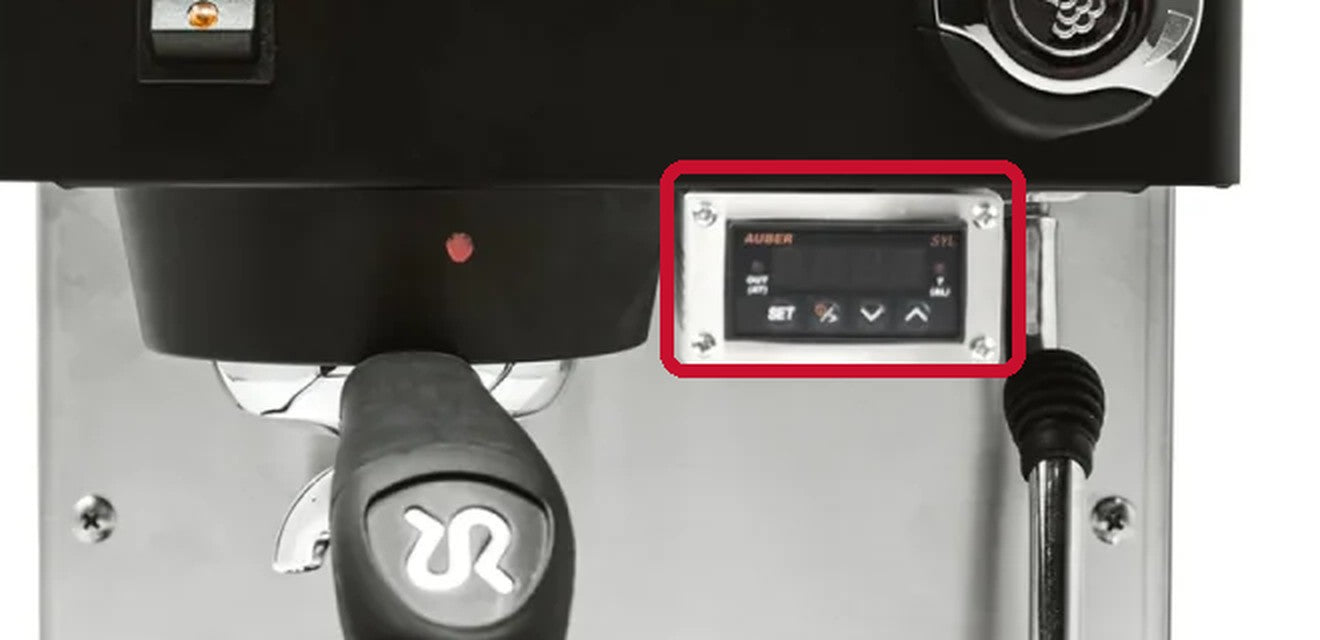
PID stands for proportional-integral-derivative. It describes a controller that uses temperature sensor feedback to regulate the machine’s heating element around a target setting. Depending on the espresso machine, the PID may control the brew boiler, steam boiler, or both.
Use the machine’s temperature menu or PID buttons to select your target setting. Check the owner’s manual first: some controls show a boiler temperature, while others display an estimated brewing temperature. After making an adjustment, allow the machine to settle at the new setting before pulling a shot.
Not necessarily. Many PID displays show the temperature measured inside a boiler. Others apply an offset to represent the estimated temperature of the brewing water. Check your machine’s manual to understand what the display measures and whether it shows the current temperature or the target setting.
Yes. A single-boiler machine may use PID control for its alternating brewing and steaming modes. On a heat-exchanger machine, the PID typically regulates the steam boiler rather than directly measuring brewing water temperature. Dual-boiler machines may offer separate temperature settings for the brew and steam boilers, depending on the design.
Follow the machine’s recommended cleaning and water-care schedule, including group head cleaning, steam wand care, and backflushing where supported. The PID controller generally does not require routine user adjustment beyond temperature settings. Follow manufacturer-specific descaling guidance, and consult the manual or a qualified technician if the display shows a sensor error.