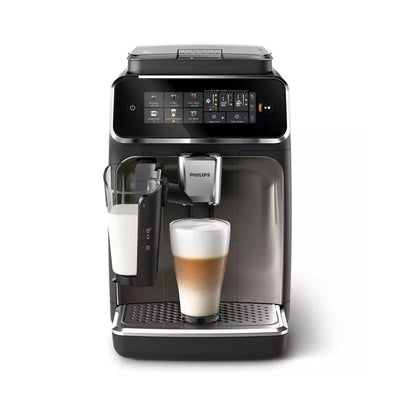
Stainless Steel Espresso Machines
Find a stainless steel espresso machine that fits your counter space and brewing style. Compare dimensions, brewing controls, and milk-steaming capabilities to narrow your options, paying attention to how much hands-on control you want when making espresso at home.
Best Sellers
FAQs
Not necessarily. A stainless steel exterior does not tell you what materials the boiler, brew group, or other internal components use. Check the machine’s specifications to see which parts are stainless steel and learn more about its construction.
Wipe the exterior with a soft, damp microfiber cloth, then dry it to minimize water spots. On brushed stainless steel, wipe in the direction of the grain. Avoid abrasive pads, and follow the manufacturer’s guidance before applying any cleaning product.
Empty and rinse the drip tray, remove used coffee grounds, and clean removable brewing parts as directed in the manual. If you steam milk, wipe and purge the steam wand after each use. Backflushing, brew-group cleaning, and descaling requirements vary by machine, so follow its recommended maintenance schedule.
For a machine that uses a portafilter, consider an espresso-capable burr grinder, a compatible tamper, a coffee scale, and a knock box. Add a milk pitcher if you enjoy milk-based drinks. Machines with integrated grinding and brewing systems may need fewer separate tools, so start with your machine’s included equipment and requirements.
Stainless steel describes the construction or finish, not the level of automation. Manual machines put more of the brewing process in your hands. Semi-automatic machines typically let you prepare the grounds and control the shot, while superautomatic machines handle grinding and brewing with fewer hands-on steps. Check the controls and features rather than judging by the exterior.