
All Brand Guides + −
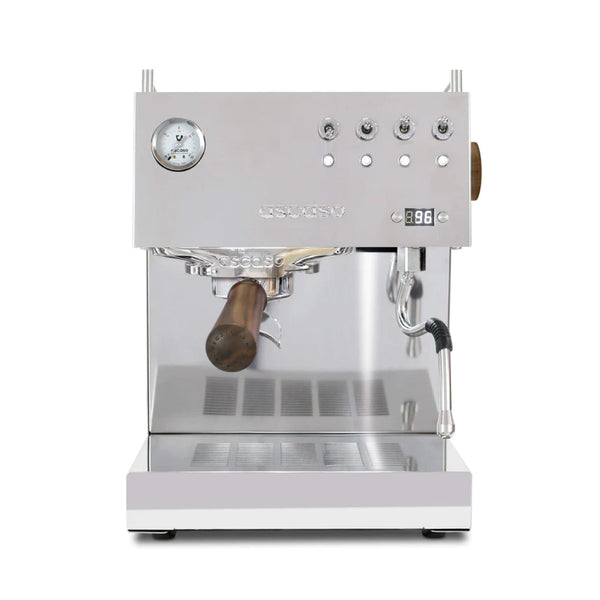
Ascaso Steel Uno Espresso Machine
Modernize your home espresso setup with the Ascaso Steel Uno! A future-facing design update to Ascaso's unique thermoblock platform, the Steel Uno offers accurate PID temperature control, programmable preinfusion, and volumetric shot lengths for effortlessly repeatable espresso. Encased in sleek stainless steel and finished with true walnut furniture, the Ascaso Steel Uno offers shot excellence and accessible steaming in a clean package.
Setup & First Use
Before using the Steel Uno for the first time, remove all packaging materials and place the machine on a stable, level counter with adequate clearance — allow at least 4 inches on each side and above for ventilation. Remove the portafilter, baskets, and drip tray and rinse them with warm water. Wipe the exterior with a damp cloth. The Steel Uno is designed for home use only and operates on a standard 15-amp household outlet. It is not approved for commercial, office, or café use.
Fill the water tank with fresh, cold water to the MAX line. Do not use distilled water — a small amount of mineral content is needed for proper extraction. If your tap water is very hard (high mineral content), consider using a Brita-filtered or lightly filtered supply to extend the machine's lifespan.
Power on the machine and allow it to heat up fully. The PID display will show the current temperature rising to the set point. Most Ascaso machines reach brew-ready temperature in under 3 minutes. When the ready light stabilizes or the temperature holds at the set point, the machine is ready to use.
Before the first pull, run a blank shot: lock in the portafilter without coffee and press the single or double shot button to flush hot water through the group head. This purges any residual factory oils and confirms the group is up to temperature. Discard the water.
The Steel Uno uses a single thermoblock for both brewing and steaming. Pull your espresso shot first, then purge the steam wand and allow 20–30 seconds before steaming milk. The no-burn steam wand design makes it safe to handle while steaming.
The Steel Uno features an analog pressure gauge on the front panel — use this to monitor extraction pressure during shots and confirm your grind and dose are dialed in.
Tutorials & Training
PID Temperature Control
The PID display shows the current brew temperature in real time. Use the controls to set your target brew temperature — typically 195–201°F (90–94°C) for most espresso roasts. Lighter roasts often benefit from a slightly higher temperature (200–203°F), while darker roasts may pull better at 190–196°F. The offset setting compensates for heat loss between the thermoblock and the puck — start with the factory default and adjust in 1°F increments based on your results.
Pre-Infusion
Pre-infusion gently wets the coffee puck with low pressure before full extraction begins, helping to even out extraction and reduce channeling. It is particularly beneficial with freshly roasted, degassing coffee. Set pre-infusion time in the PID menu — 2–5 seconds is a good starting range. Finer grinds with higher doses benefit from longer pre-infusion.
Volumetric Shot Programming
Ascaso machines allow you to program single and double shot volumes so the pump stops automatically when the programmed volume is reached. To set: select the shot button (single or double), begin extraction, and press the button again when the desired volume is in the cup. The machine saves that volume for future shots. Start with 1.5 oz (44ml) for a double shot as a baseline.
Single Thermoblock — Brew Then Steam Workflow
The Steel Uno uses one thermoblock for both brewing and steaming. Pull your espresso first, then briefly purge the steam wand, wait 20–30 seconds for steam pressure to build, and texture your milk. The no-burn wand is safe to reposition even while hot.
ESE Pod Compatibility
The included ESE pod basket allows use of E.S.E. (Easy Serving Espresso) paper pods. Insert a pod into the basket, snap it into the portafilter, and brew as normal. Do not attempt to tamp ESE pods — they are pre-dosed and pre-pressed. After use, discard the pod and rinse the basket thoroughly.
Adjustable OPV
The over-pressure valve (OPV) controls the maximum brewing pressure. The factory default is set to approximately 9–10 bar, which is correct for most espresso. If you are seeing channeling, over-extraction, or using a lower-density puck, lowering the OPV to 8–9 bar can improve results. The OPV is accessible on the machine; consult the Ascaso-USA user guide at ascaso-usa.com for the adjustment procedure for your specific model.
Dialing In Espresso
Aim for a 1:2 ratio — double the output weight of the input dose. For 18g of coffee in, target 36g out in 25–35 seconds. If the shot runs too fast (under 20 seconds), grind finer. If it runs too slow (over 40 seconds), grind coarser. Use the analog pressure gauge during extraction — aim for 8–9 bar at peak. Tamp with consistent pressure (approximately 30 lbs) and level distribution.
Steaming Milk
Purge the steam wand for 2–3 seconds before steaming to expel any condensate. Submerge the tip just below the surface of cold milk and open the steam valve fully. Keep the tip near the surface to introduce air (stretch) for the first 3–4 seconds — you should hear a gentle hissing sound. Then submerge the tip slightly deeper to swirl and heat the milk to 140–150°F (60–65°C). Do not exceed 160°F — this denatures milk proteins and produces a flat, burned flavor. Wipe the wand immediately after each use and purge again.
Analog Pressure Gauge
The gauge reads group head pressure during extraction. At rest (no shot running), it should read near 0. During extraction, it should rise and hold between 8–10 bar in the green zone. Consistently under-pressure shots suggest a grind that is too coarse, under-dosing, or a partially clogged group screen. Consistently over-pressure suggests grind too fine or over-dosing.
Auto-Standby and Power Saving
The PID menu includes an auto-standby setting. When enabled, the machine will drop to a low-power state after a set period of inactivity. Wake it up by pressing any button — it will return to full brew temperature quickly. For morning routines, Ascaso machines heat up fast enough that auto-standby is a practical energy-saving option.
Cleaning & Maintenance
Daily — After Each Session
After brewing, remove the portafilter and knock out the spent puck. Rinse the portafilter basket under hot water. Wipe the group head gasket and shower screen with a damp cloth to remove loose grounds. Purge the steam wand for 2 seconds, then wipe with a clean damp cloth immediately. Remove and empty the drip tray; rinse and dry it.
Weekly — Group Head and Portafilter
Soak the portafilter basket in hot water for 10–15 minutes to dissolve oils and residue. Scrub with a group head brush. Wipe the shower screen and group gasket with a damp brush. Inspect the group gasket for cracks or deformation — replace if it no longer seals cleanly against the portafilter.
Weekly — Steam Wand
If milk residue has built up on the steam wand tip, soak it in a small cup of hot water with a few drops of milk frother cleaner for 10 minutes, then wipe clean. Ensure the steam tip holes are clear — use a pin to carefully clear any blocked holes.
Monthly — Backflushing (OPV-equipped models)
Backflushing cleans oils from the group head and three-way solenoid valve. Insert the included blind basket into the portafilter, add a small amount of espresso machine cleaner (such as Cafiza), lock in the portafilter, and run 3–5 short brew cycles of 10 seconds each, followed by 3–5 rinse cycles with no cleaner. Finish by running a blank shot with the blind basket to fully flush residue. Note: backflushing requires the OPV/solenoid setup — do not attempt if your model does not have a solenoid valve.
Descaling
Descale when the machine's performance changes — slower heating, reduced steam pressure, or temperature instability are early signs of scale buildup. Use Ascaso's recommended descaling solution or a citric acid-based espresso descaler. Follow the descaling procedure in your machine's user guide available at ascaso-usa.com. Do not use vinegar — it can corrode internal components. After descaling, run at least 3 full tanks of fresh water through the machine to completely flush any residue.
Water Tank
Remove and rinse the water tank weekly. If you notice any sliminess or discoloration, wash it with warm soapy water, rinse thoroughly, and air dry before refilling. Do not use the machine with an empty or dry tank.
Troubleshooting
Machine Not Reaching Temperature / PID Stuck
Allow 3–5 full minutes after power-on for the thermoblock to stabilize. If the PID reads a temperature far above or below the set point and doesn't stabilize, power the machine off for 30 seconds and restart. If the issue persists, contact Ascaso or SCG — thermoblock sensor faults are a service-level repair.
Espresso Running Too Fast / Weak
Grind finer, increase dose by 0.5–1g, or tamp with more consistent pressure. Check that the shower screen is clean and the portafilter basket is not damaged. Confirm the PID temperature is at the correct set point. If using pressurized baskets, ensure they're fully clean — clogged holes produce channeling that reads as fast flow.
Espresso Running Too Slow / No Flow
Grind coarser, reduce dose, or reduce tamping pressure. Check the OPV is not set too low. Ensure the group screen is not blocked with compacted grounds. If the pump sounds strained and no water flows, the group may be blocked — remove the portafilter and run a blank shot to confirm water flows freely from the group head.
Bitter or Over-Extracted Shots
Lower the brew temperature by 2–3°F, grind slightly coarser, or reduce pre-infusion time. Bitter shots often indicate too-hot extraction or over-exposure. Check that your dose and ratio are in range (approximately 1:2 in/out).
Sour or Under-Extracted Shots
Increase brew temperature by 2–3°F, grind finer, or increase pre-infusion time. Sour shots indicate insufficient extraction. Also verify that your coffee is not past its prime — stale coffee resists even extraction.
Steam Pressure Weak
Allow more time for the steam boiler or thermoblock to reach full steam temperature after pulling a shot. Do not attempt to steam immediately after a shot on single-thermoblock machines — wait 30–60 seconds. If steam is consistently weak across all uses, descaling may be needed, or the steam tip may be partially blocked.
Portafilter Difficult to Lock In
This usually means the group gasket has swollen or hardened with age. If newly installed, run several cycles to soften the gasket. If the gasket is cracked, flat, or has been in use for 1–2 years, replace it. Always lock the portafilter with the handle at the 8–9 o'clock position before rotating to the locked 4–5 o'clock position for correct alignment.
Machine Leaking from Group Head
A leaking group head is almost always a worn or misaligned group gasket. Power off and unplug the machine, allow it to cool, then replace the group gasket. Ascaso group gaskets are available at ascaso-usa.com. If leaking continues after gasket replacement, contact Ascaso support.
Warranty and Support
Warranty and Support
The Ascaso Steel Uno carries a 12-month domestic warranty on the machine and a 5-year warranty on the thermoblock. For warranty service, contact Seattle Coffee Gear at seattlecoffeegear.com/policies/contact-information or call 866-372-4734. You may also contact Ascaso USA directly at ascaso-usa.com.
About Ascaso

About Ascaso
Brand warranty information
What it Covers: Ascaso Machines and Grinders
Length: 1-year parts and labor
Who Supports the Warranty: Seattle Coffee Gear
Warranty Contact Information: 866-372-4734 or email us at service@seattlecoffeegear.com
Notes: Read more about Seattle Coffee Gear's Warranty coverage.
Can SCG Repair? Yes, Machines Only read more about our repair services